
Self-care doesn’t have to be expensive, time-consuming, or feel like a chore.
Here are 30 small acts of self-care you can do once a day for a month
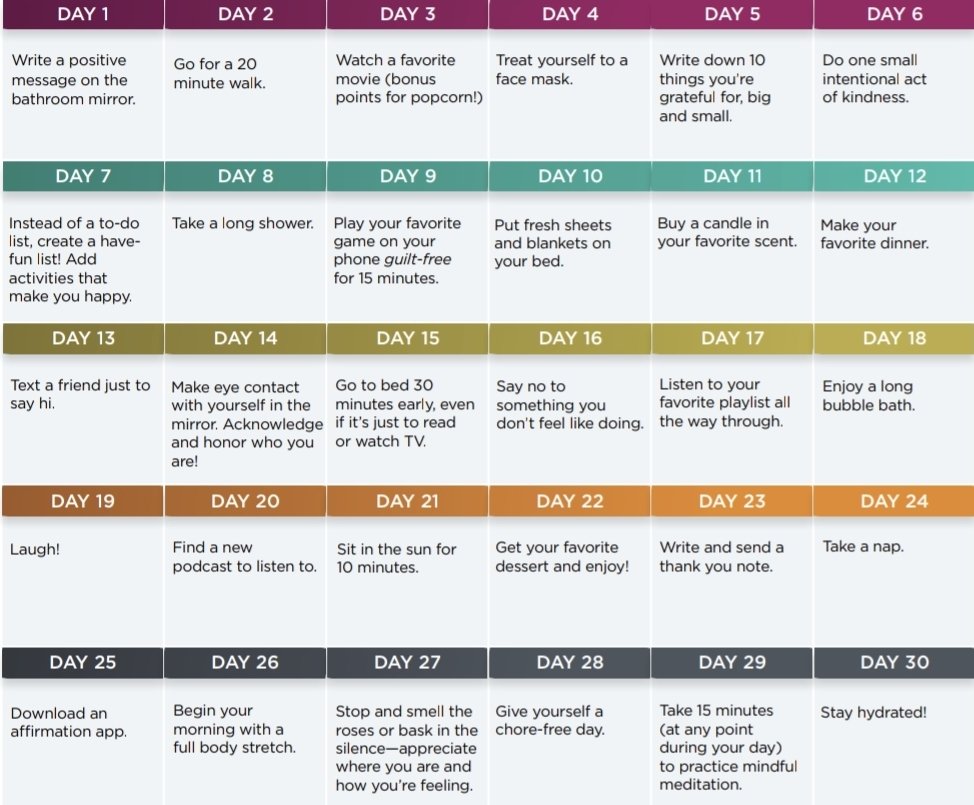
Self-care doesn’t have to be expensive, time-consuming, or feel like a chore.
Here are 30 small acts of self-care you can do once a day for a month
1. Where are you most empowered in your life?
2. Where are you least empowered in your life?
3. What self-sabotage behavioral patterns do you experience most? Why?
4. Do you want kids? How many?
5. What kind of parent do you want to be?
6. What values do you feel are important when raising children?
7. What were the highlights of your adolescence? What were the lowlights?
8. How would you describe your relationship with your mother? To your father?
9. How do you cope with stress? What tools or behaviors show up for you
when you’re under stress?
10. What do you often turn to when you are trying to motivate yourself?
11. Where do you have a lot of self-awareness? (Ex. At work, about behavior)
12. Where do you have minimal self-awareness? (Ex. In relationships, with
family)
13. What negative patterns do you most often have with your relationship
to money?
14. What are your primary triggers when you’re around family?
15. What are your primary triggers when it comes to relationships?
16. What types of conversations trigger you most?
17. What are your greatest fears in general, in relationships?
18. Where do you waste the most time in your life? Why?
19. What characteristics do you judge most in:
a) Your mother
b) Your father
c) Your siblings
d) Your partner
e) Your close friends
20. Where are you exhibiting these same traits? List 2 different areas/circumstances in your life where you do this also.
21. What patterns of behavior have you picked up most from your Mother? Father?
22. What are you still stuck on from the past? Look deeply – how is it serving you to hold onto this still? 23. Do you have any challenges with my family?
24. How will we handle rough patches in our marriage?
25. How would you define a healthy marriage sexually? (Frequency,
meaning you give to sex)
26. What are you most insecure about?
27. Where are you a powerful communicator?
28. Where are you a poor communicator? Why?
29. What are your top 5 Values?
30. What do you think makes a relationship last?
31. What qualities are most important for you in a romantic relationship?
32. What do you need from me?
33. Where do you think you show up well in our relationship? Where do you
think you show up not as well as you’d like to?
34. Does anything scare you about marriage? If so, why? Where does this fear come from?
35. Why do you want to get married?
36. Do you have any challenges with my family?
37. How much do you share with others about our relationship? How much
do you feel is appropriate for me to share?
38. What boundaries do you set with:
A) Your family
B) Your partner
C) Your co-workers
39. Are these boundaries motivated by fear or self-love? Are they respected?
40. What are you ashamed of?
41. How will we divide household duties (before and after kids)?
42. Do you know your love language(s)? If so, what are they?
43. What needs are most important to you in our relationship?
44. Do you feel validated, seen, heard, and understood enough by me?
45. Do you feel that you can discuss anything with me?
46. What have you not forgiven yourself for?
47. Where does guilt show up most often in your life?
48. How will we collectively handle hard times? What do we need from one
another?
49. How important is alone time to you and can we make peace with
this/understand this?
50. What are our boundaries in relationships to others? Where do we draw
the line between friendship and a potential emotional affair? 51. What is our expectation about where we want to live/why?
52. How much time is appropriate to spend with in-laws and family?
53. How will we cope if one of us gets laid off or wants to leave our job?
54. What are your core wounds?
55. What negative patterns do you notice took place in past relationships?
Why? What measures will we collectively take to prevent this from
happening between us?
56. What is your relationship to spirituality/religion? What level of priority is
this in your life?
57. Are we fully present together or are we distracted by TV, phone, etc.?
When is this appropriate/not appropriate?
58. How would we like to educate our kids? How would we like to save for
our kids?
59. How important is physical affection to you?
60. How do you define romance? What keeps the romance alive for you?
This is to all my parents, or neurodiverse people, or with wild defiant children or both – with love ❤️
Everyone is always doing as well as they can within their personal limitations, their personal history, what they know and don’t know and what they’re feeling in that moment. If they could make a healthier decision, they would. This includes you.
Now people with neurodivervisity, Autism, ADHD, Cptsd, PTSD and with many other mental health issues. The smallest little stressors can trigger intense feelings of fear, anger, and even hopelessness.
Defense Mode as a state of overwhelm in which someone with Neurodiversity is scared, frustrated, or angry, as well as shut down and withdrawn.

When you’re in Defense Mode, everything is harder because you’re constantly trying to protect yourself from the overwhelming stress of both real and imagined threats that constantly surround you.
You can even get stressed out just from your own thoughts and beliefs, such as a belief that you’re bad at math, so why bother? You might assume that your parents are tyrants who are trying to manipulate you.
Whenever the stress and overwhelm gets to be too much, Defense Mode will always manifest in one of three ways: fight, flight, or freeze.
The person in Defense Mode might get angry and start yelling or they might try to run away, perhaps by escaping into video games or some other distraction. Or, they might shut down as they keep mumbling “I don’t know”, in response to all of dad’s questions, perhaps in the hope that she’ll eventually stop the interrogating and leave.

Day to day, each of us falls somewhere along this continuum depending on the amount of emotional resources we happen to have available. Just like with the Spoon theory. It may even help to think of this in terms of money.
Let’s imagine being in the “Nope state” is like being deep in debt. I’m talking like hundreds of thousands of dollars in debt. At the same time, your income is so small that you can’t even keep up with the monthly accruing interest, much less paying down the principal. As a result, you’ll probably stay stuck here drowning in emotional debt indefinitely unless you receive some sort of outside assistance or intervention.
In terms of emotional capacity, this is like the guy who spends 16 hours a day playing video games in his parents’ basement. No job, no school. I mean even the thought of trying to get a job or enroll in school is completely overwhelming. They rarely go outside and if left to their own devices and provided sufficient food, water and wifi, they would probably stay there on that couch forever. Every day they feel exhausted, frustrated and overwhelmed. (I would know because I lived it)
Defense Mode: is a step above that. In stereotypical Defense Mode you’re still somewhat in debt, but it’s not deep enough to the point that you feel the need to shut down completely and just “nope” out of life. You might still be able to handle school or hold down a job, but barely. Stress, anger and fear is still your default setting most of the time. Meltdowns are still happening on a fairly regular basis and it usually only requires a small to moderate amount of stress to send you off the deep end.
Functional: is like the money version of living paycheck to paycheck. You’re finally out of debt, But there is absolutely no wiggle room between your income and your expenses. You managed to get through most days without too much overwhelm and meltdowns are pretty rare, but since your emotional savings account is basically at zero, any major unexpected stressors will instantly upset that delicate balance you’ve achieved sending you spiraling back down into a state of Defense Mode. At that point, you have to begin a new, the slow process of digging yourself out of emotional debt in order to get back to a functional state.
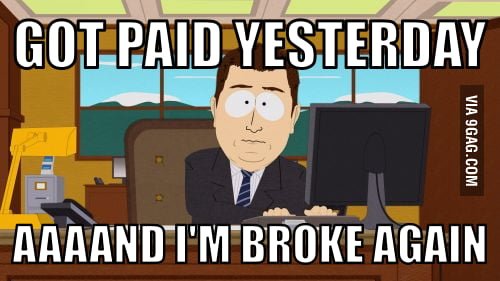
Additionally, since you’re living paycheck to paycheck, you rarely have any extra capacity or resources left over to give to others. You might even feel resentment towards people that ask for your help in the first place. After all, you’re barely keeping your own head above water, so how can you even begin to think about someone else’s needs?
Thriving: is when your income finally exceeds your expenses. It is a state of abundance in which you have plenty of savings in the bank. You still experience stress in life as we all do, but now you have tons of capacity to handle it. You rarely, if ever, get overwhelmed to the point of shutting down or losing your temper.
In fact, since you have plenty of emotional resources to spare, you’re more than happy to give what you can to help others. When you see someone close to you that might need some help or a listening ear, you’re happy to go out of your way to sit with them and support them. You’re capable of holding space for their anger and their anxiety without becoming angry or anxious yourself. Most of the time it feels like stress comes and goes very quickly for you and you’re able to respond to challenging situations with empathy and calm level-headed understanding.
Now Getting Out Of Defense Mode…
2 powerful habits that you can start putting into action right away in order to help yourself or someone else get out of Defense Mode. Now, this is not an exhaustive list, but there’s many techniques. But to start it off!
Number 1 – is decompression time.
Have you ever noticed how you tend to feel more cranky when you’re tired or you’ve had a long day? We tend to go into Defense Mode more when our emotional resources are low, so they need to be replenished in order to come back out of defense mode. Taking time, even just a few minutes away from the business of life to decompress and do some strategic self care is one of the best things you (or your child) can do to reduce overwhelm and increase your capacity to handle stress.
Number 2 – is about building trust. In a close, healthy, parent child relationship, trust forms the bedrock of safety and effective cooperation. Once sufficient trust is present, Defense Mode naturally starts to disappear, and conversations tend to happen smoothly and easily.
On the other hand, when a feeling of trust and safety is absent between you and your child, then the intention behind everything you do or say is suspect. So even the simplest of conversations can quickly spiral down into conflict.
What makes ones family toxic is usually
aggressive denial or minimization of problems, abuse and dysfunction.
The hills they will die on are actually choices they make between their relationship with their children and how they look to the outside when it comes to their part.
“I never said that.”
“That never happened.”
“I never did that”
“What is your problem?”
“You’ve always been the problem.”
“So what if I hurt you.”
And the damage comes from how easily and
quickly they take their high ground.
In our healing journeys, we have to ask, what is really at stake for them and what are they choosing?
While it would be hard for anyone to hear and “So what if I hit you” and “I wish you were dead already”
It’s hard for anyone to hear, acknowledge, and process abuse that they had responsibility in.
But no one is going to die if they acknowledge, ask about or admit failings.
What would it mean to the survivor to hear..
“I’ve been hiding from that”
“I wasn’t in my right mind and I know you suffered because of my choices.
“l want to hear more and not be defensive”
Those would be coming from someone valuing and bridging a relationship with their children over the shame and reality of their parenting.
It’s a choice. and while the healthy examples
seem idealistic, they do happen in families that recognize they could lose us. Unfortunately in toxic families, they can’t wait for you to leave so they can stay in their regret, guilt, shame, and defense that everything was fine.
Please keep healing friends, I know you have it within you!
❤️ Nyssa
I know things are bleak. And even though you feel run down, like you’re not getting anywhere at all. Find gratefulness in where you are. Even though we’re not where we want to be, things could ultimately be a million times worse and a million times harder. Just one main occurrence could change your life in an instant for better or for worse. We do our best trying to create that sense of safety, in an unsafe world, and at any moment that rug can be pulled from under you. Be grateful for where you are. Find the peace and mental safety within that. Build upon that foundation, even if you’re disheveled into the abyss. There can always be more and there can always be less. The best thing you could ever do, is create love, no matter where you are.
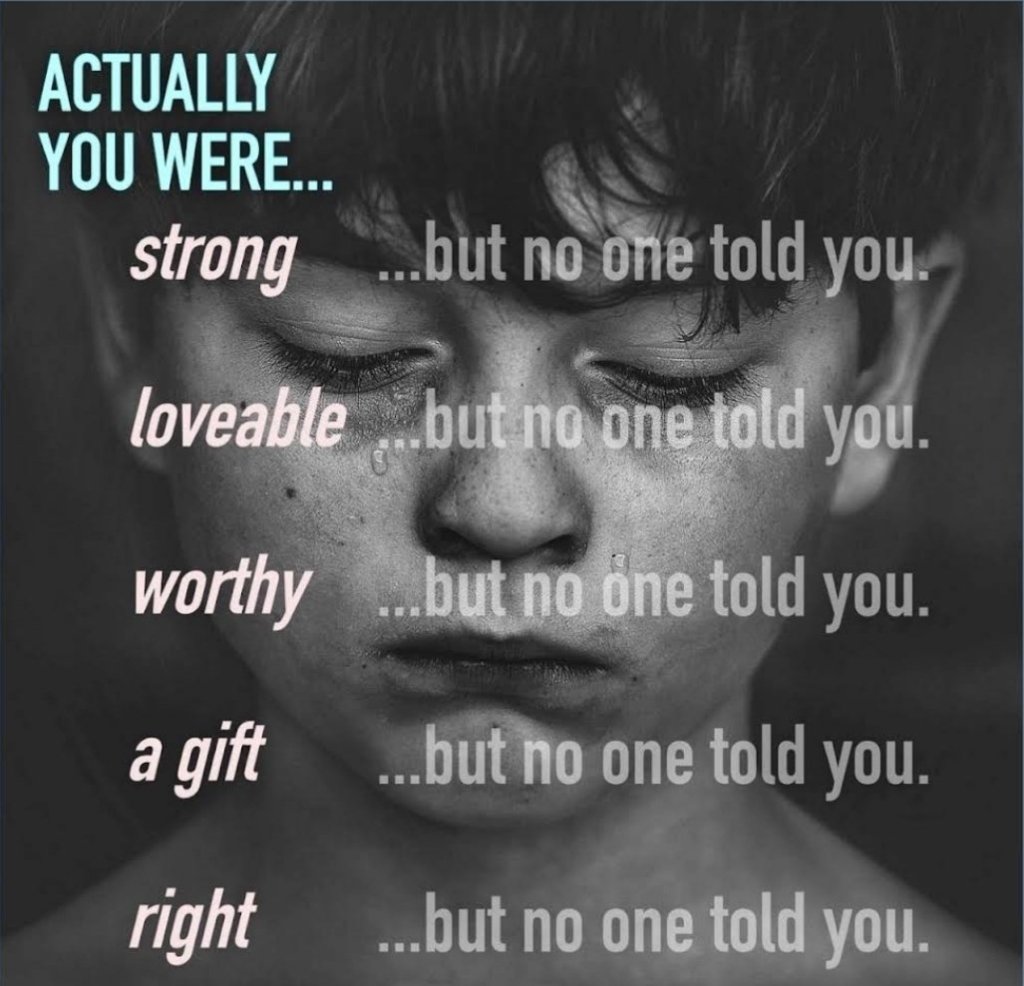
Children who are abused, grow into adults who struggle with shame. Use these effective affirmations which can help heal our deep trauma conditioning.
“I love you and we’re not going to start a fight today.“
First statement – some of us start fights because we don’t know how to do healthy conflict or intimacy. We’re in a fight before we know it. Shame comes from how we contribute to the mess, despite whether our partner is right or wrong.
“I love you and we’re going to just let the person be upset.”
2nd statement – some of us have a strong belief that we are responsible for and/or the cause of other people’s upset – just like in childhood with our parent’s moods (shame)
“I love you and we’re not going to apologize for something we didn’t do.”
3rd statement – some of us, (a lot of us) overly take fault or blame even when it’s made up in our head a lot of the time. Shame about existing or burdening others just like in childhood. Because we were made to feel like a burden or a failure for simply existing.
The way out – is finding & getting our adultness in shape to practice these self boundaries and not act from out of those childhood beliefs.
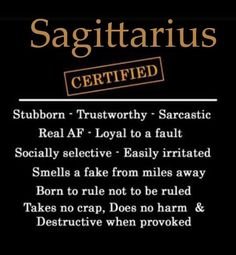
Moon in Sagittarius (wed & thurs) 1/18-19
Sagittarius is the archer. Point your arrow.
always be searching for something. For a feeling of safety, you need to have a goal, mission or philosophy that gives your life meaning. have an optimistic approach to life and believe that things will get better, even if you get into trouble.
Please take care of these extra senstive organs for next 2 days especially: Liver, sacrum, thigh bone, tail bone, hip muscles, hip joint, lumbar vertebra, lumbar muscles.
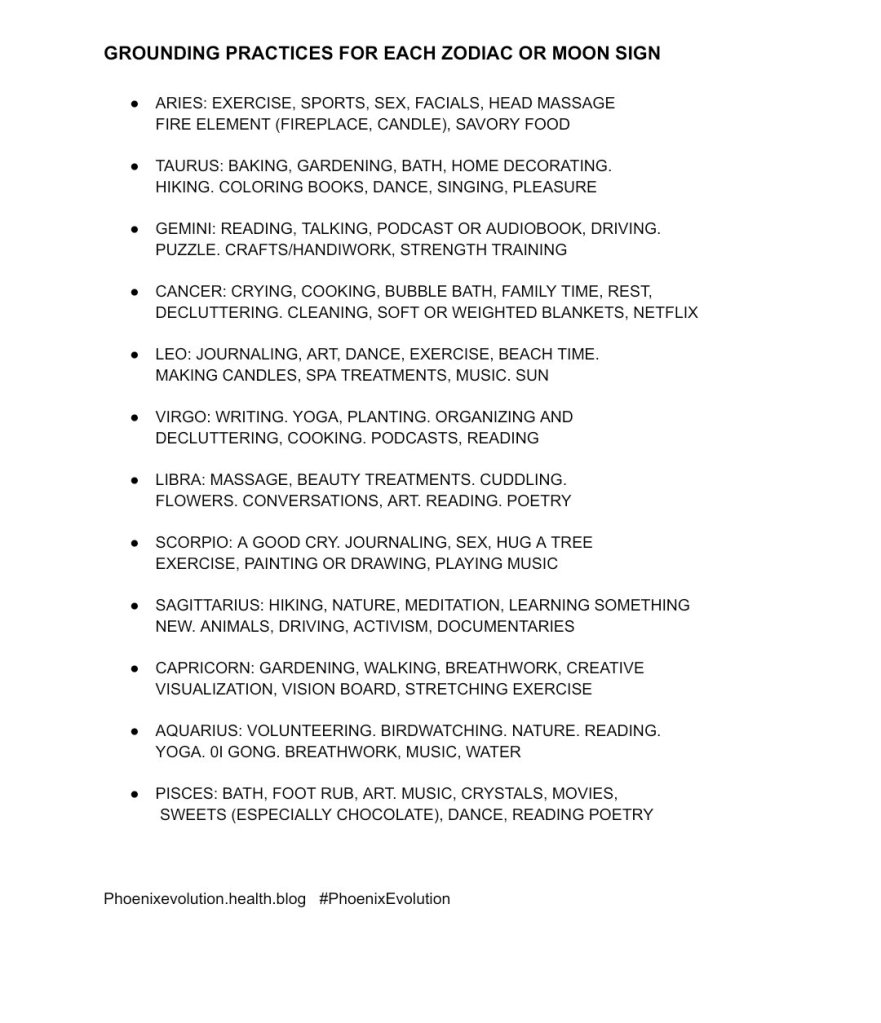
Meditation, Epson salt baths, light stretching, yoga,
Dandelion root, milk thistle (best for liver)
vitamin e, magnesium, tumeric with black peppern omega 3 (fish oil) are so important everyday
The Waning Crescent moon phase is the ideal timeframe to do shadow work. (identifying emotional blockages, honoring them, and releasing the tension, anxiety, worry, and cleansing your energetic field. You will then have the space to fill your cup with neutrality, understanding, gratitude, and deep self reflection. 🙏

The balsamic moon, also known as a waning crescent, is the final sliver of lunar light in the sky before the birth of the new moon. This occurs when the moon is less than 45 degrees behind the sun, and it looks like a crescent in the sky. 🌘
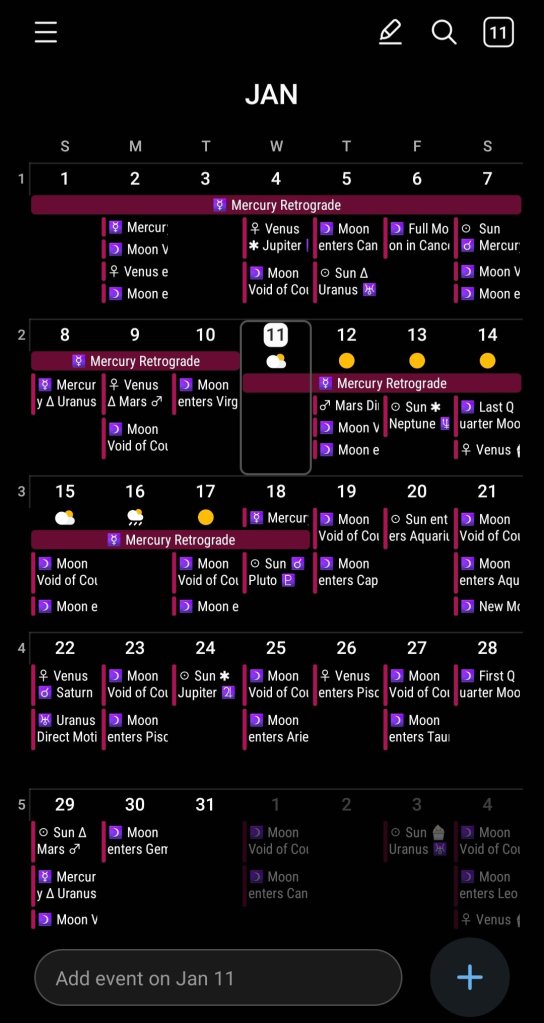
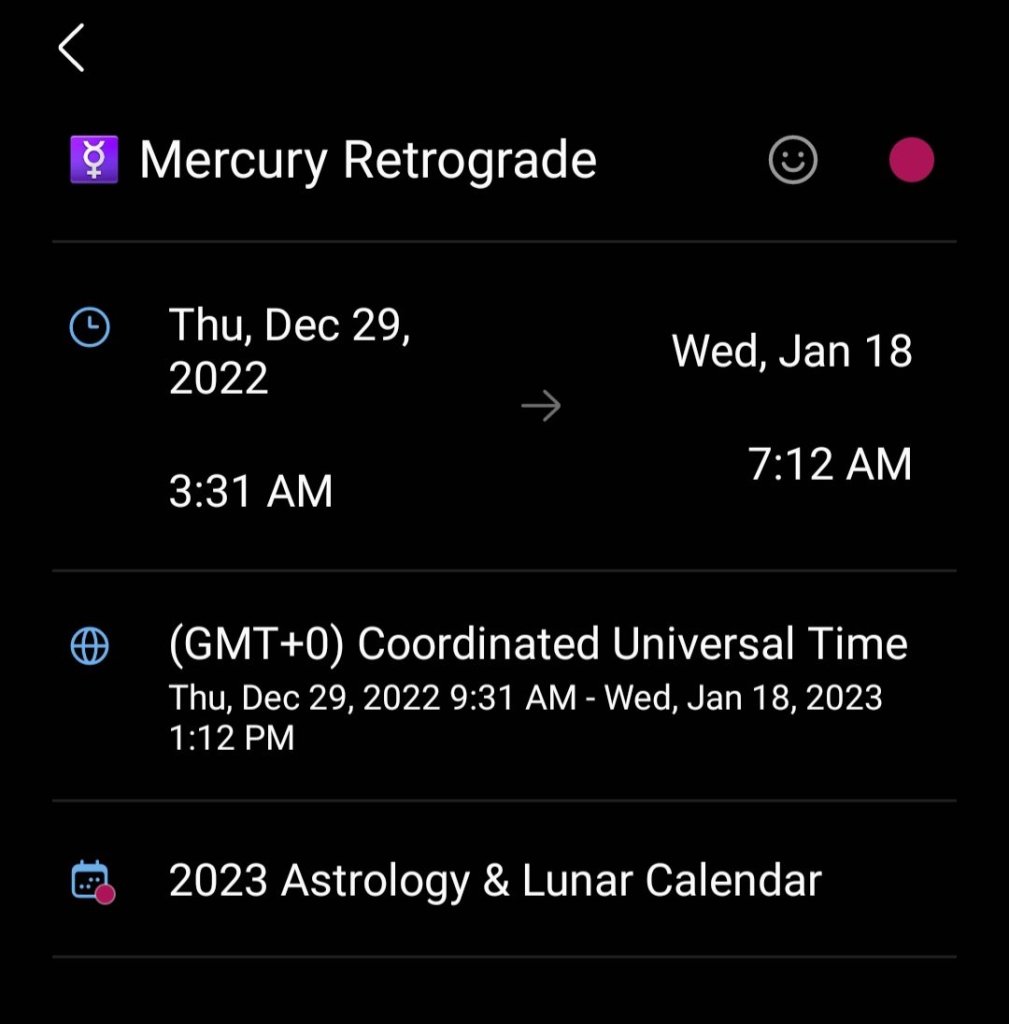
Always know what’s going on in the stars! 2 separate calendars available, all astrological aspects for the year, and then all the Moon phases of the year (they’re on 2 separate calendars as the Moon switches signs and places every 2.5 days so it can really overpower the calendar agenda) easy to switch on and off
🌌 2023 Astrological Calendar – $30
🌙 2023 Lunar Moon phases Calendar – $30
Or Both calendars $50
Available for download and integrate with your Google calendar.
Email Phoenixevolutionllc@gmail.com
Cash app, PayPal, Venmo, Zelle options

















 Phoenix Evolution